

Dear colleagues:
I am always happy to pass along your professional contact information when I post about a project opportunity in private Facebook groups for editors or via profession-related email discussion lists. [Please note that this post is not a request for you to send me such information right now.]
I worry about those of you who don't have links to places online where potential clients can find out all about you. I'm talking about a business website, LinkedIn profile, some other professional profile, or even a business-related blog. You don't need all of those items; most times, just one of them is enough.
Because potential clients don't want to be overwhelmed by lots of email attachments, I don't pass along your résumé or curriculum vitae. In fact, lots of corporate email systems automatically strip out email attachments. Thus, if you haven't provided links to any sites where people can learn about you, then giving just your name, phone number, and email address isn't going to get you many responses from potential clients.
Even if you can't afford to maintain a business website, please, please at least set up a free profile for yourself at LinkedIn or some other respected website. For example, editorial associations often allow their members to set up a personalized listing in the societies' online directories. Please take advantage of that service. It doesn't take much time to put together a profile, and it will help clients find you.
Respectfully,
Katharine

Thursday, May 07, 2015
Thursday, March 05, 2015
Learn About Medical Editing at the American Copy Editors Society Conference
What? You haven't signed up yet for the 2015 conference of the American Copy Editors Society in Pittsburgh? It's coming up March 26–28, and online registration closes Tuesday, March 10. So get cracking! Go here to register:
Betcha didn't realize that Friday, March 27, is practically Medical Editing Day at the conference. Look! Four separate sessions (see the blue arrows in the picture below) on various aspects of medical editing! And I'm leading the first session at 9 a.m.: "Avoiding Pitfalls in Medical Editing."
In my session, I'll focus on

American Copy Editors Society conference continuing education medical editing editing editor publishing EditorMom
Betcha didn't realize that Friday, March 27, is practically Medical Editing Day at the conference. Look! Four separate sessions (see the blue arrows in the picture below) on various aspects of medical editing! And I'm leading the first session at 9 a.m.: "Avoiding Pitfalls in Medical Editing."
In my session, I'll focus on
- Conventions in medical editing
- Editing research reports versus materials for laypeople
- Coping with jargon
- Ensuring that language is patient-friendly
- Dealing with statistics
- Editing reference lists
- Preventing word pileups
- What sections of the AMA Manual of Style you must pay attention to
- Other reference works you'll need access to
- How to move into the niche of medical editing
- Where to find clients who need medical editing done
American Copy Editors Society conference continuing education medical editing editing editor publishing EditorMom


Wednesday, January 28, 2015
Learn More About Medical Editing From Me This Spring
Listen up, you freelance editors who do medical editing or want to move into the field: I'll present "Avoiding Pitfalls in Medical Editing" at the March 2015 annual conference of the American Copy Editors Society in Pittsburgh!
Medical editing has its own special considerations and pitfalls. In my session, I'll focus on
Sign up now for the conference before spaces run out!
American Copy Editors Society conference continuing education medical editing editing editor publishing EditorMom
Medical editing has its own special considerations and pitfalls. In my session, I'll focus on
- Editing conventions
- Research reports versus materials for laypeople
- Jargon
- Patient-friendly language
- Statistics
- Reference lists
- Word pileups
- Vital sections of the AMA Manual of Style
- Necessary reference works
Sign up now for the conference before spaces run out!
American Copy Editors Society conference continuing education medical editing editing editor publishing EditorMom
Wednesday, December 31, 2014
New Year's Resolution for Editorial Workers: Build a Better Network
If you're an editorial worker, one New Year's resolution that you might make is to build a better professional network. These tools and tips will help you:
Here's wishing all editorial workers an intellectually stimulating and financially rewarding 2015!
professional associations freelancer freelancing copyediting copyeditor EditorMom
- Check out the links on the Networking page of the Copyeditors' Knowledge Base. For all organizations included there, I've provided links to their website and to their Facebook page, LinkedIn group, and Twitter account where available. The organizations are from all around the world, not just the United States of America, and they are targeted at various editorial specialties. If you know of additional organizations that should be listed there, please send the appropriate links to me at editor@kokedit.com.
- The blog of Copyediting newsletter carried a post in September 2014 about professional associations for Canadian editors. You do not have to have a paid subscription to the newsletter to access the blog post.
- The Editors' Association of Canada has on its website a chart of Canadian associations that compares them on the basis of
- Services offered
- Amount of membership dues
- Membership requirements
- Organization publications and communications
- Organization marketing and job-search tools
- Legal and administrative activities
- Discounts offered to members
- Opportunities for professional development and education
- If you do have a paid subscription to Copyediting newsletter, read my column The Business of Copyediting in the April–May 2014 issue ("Why Join and Be Active in Professional Associations?" on page 1) for a rundown of how to make the most of your association memberships.
- What if you want to afford to join several professional associations? I am a member of the following associations:
- The Editorial Freelancers Association (EFA)
- The American Copy Editors Society (ACES)
- The American Medical Writers Association (AMWA), which counts medical editors among its members
- The Board of Editors in the Life Sciences (BELS)
- The Council of Science Editors (CSE)
I'm not wealthy, so how do I afford all of those membership dues? I signed up for each organization at a different time of year, so that the dues for all of them are not payable all at the same time. You can use the same trick to stay within your budget.
Here's wishing all editorial workers an intellectually stimulating and financially rewarding 2015!
professional associations freelancer freelancing copyediting copyeditor EditorMom
Friday, December 19, 2014
Making Lemonade Out of Lemons
This guest post was written by my colleague Carolyn Haley, a talented editor and author. She last wrote a post here in 2011. Today she provides helpful insights for editors who suspect a particular project needs more editorial work than the author or other client requested.
Most independent editors, somewhere over the course of their careers, find themselves stuck with a project that needs way more work than they were hired to do. Much angst and frustration usually result, and sometimes damaged client relations.
How to fix this is a two-part equation. The first part is actually the second part: how to avoid a rerun in the future. That boils down to learning what kind of editorial work you are best suited for and how to acquire it, along with learning how to see undesirable projects coming and heading them off at the pass. Such foresight takes experience, starting with savvy communication with your prospects, and performing sample edits before you accept a job.
The real first part is getting through a project already on your desk that has expanded—or exploded—and still ending up with a happy client. The internal conflict often arises from editorial integrity—in other words, the personal need, compounded by the professional drive, to “fix” a poorly written work that seems doomed to publishing failure.
What’s Good Enough?
It’s not always possible to recast the contract. In those cases, your choice comes down to adapting to the changed circumstances or bailing out.
Bailing out is rarely desirable, leaving coping the better plan. To do so, you must spend some time thinking about broader issues. For example, what does “fix” or “make it right” mean? And what guarantee is there that any two editorial professionals are going to have the same understanding of what “right” is?
Most editors are uncomfortable working with subpar writing, at least when we do not have control and/or the remuneration to compensate for the labor and stress. As editors we are charged with helping authors make their work the best it can be, but who gives us the authority to deem that it’s good enough—or isn’t?
Is it more important to protect authors from making fools of themselves, or to accept that other parties are the ultimate arbiters of what’s “good enough” and just provide the service requested?
Keeping Perspective
I had to resolve this in my conscience and business strategy early on. I make my living editing mainly slush-pile-quality material. Occasionally something excellent comes along, but for the most part I get work that needs developmental editing—if not a full rewrite—for which I’m hired only for copyediting. (Sometimes I can talk clients up a notch but that’s the exception, not the rule.)
Learning how to deal with this has been a painful challenge. It helps to remember that I write dreadful stuff, too, and know how hard it is to do even that, much less learn what’s needed to improve the work and make it sellable or comprehensible to other people.
Within that frame of reference, I am able to keep in mind that just because I think somebody’s work needs significant rewriting, not everyone else does. If the entire professional cadre of editors went to the library together and each chose one book we think is superb and another we think is awful, we would likely end up with a stack a mile high in each category with few or no overlaps.
Point is, it’s not our job to judge our clients’ work. It’s our job to help them make their work shine, and educate them as best we can without overdoing our investment of time and effort, disproportionate to our pay.
A Win–Win Option
So, when you get stuck with a crummy project, here’s one way to deal with it.
Don’t waste your breath telling authors they need to rewrite; give them an idea how to go about it. This comes from showing via your edits, and telling via your comments, along with providing helpful resources. (For book-length work, I start with recommending Dwight Swain’s Techniques of the Selling Writer, then work down a list.)
Focus on the mechanics—clarity, consistency, choreography, comprehension—and present your comments and queries from a reader’s point of view. The work’s quality will be judged by readers and any acquiring editors or contest judges; not your problem if it’s doomed to rejection. All you can do is improve its chances in a harsh world.
When the job is finished, thank the author for the chance to work with him or her and wish them success. If the author is happy and wants to thank you lavishly in the acknowledgments, and you don’t want to be associated with the work, politely decline. You need only say that your policy is to remain neutral and invisible, as an editor’s job is to support an author’s work, not share credit for it.
Then ask for referrals.
Unless you’re operating at the topmost tier of the publishing world, it’s likely you’ll go around again with the same issues sooner or later. Only by keeping your workflow vigorous do you have a chance of attracting the best authors and enjoying the best jobs. So instead of griping about the quality of your clients’ work, dive in and become their partner to elevate it to the next level.
____________________
Carolyn Haley operates DocuMania, a freelance editing, writing, and reviewing service based in rural Vermont. She works with a diverse mix of commercial, indie, and academic clients on their works for publication, as well as teaches novice authors and editors.
Where to find Carolyn: business ▪ LinkedIn profile ▪ books ▪ blog ▪ book reviews
authors professionalism reputation freelancing copyeditor copyediting editor editing publishing EditorMom
Most independent editors, somewhere over the course of their careers, find themselves stuck with a project that needs way more work than they were hired to do. Much angst and frustration usually result, and sometimes damaged client relations.
How to fix this is a two-part equation. The first part is actually the second part: how to avoid a rerun in the future. That boils down to learning what kind of editorial work you are best suited for and how to acquire it, along with learning how to see undesirable projects coming and heading them off at the pass. Such foresight takes experience, starting with savvy communication with your prospects, and performing sample edits before you accept a job.
The real first part is getting through a project already on your desk that has expanded—or exploded—and still ending up with a happy client. The internal conflict often arises from editorial integrity—in other words, the personal need, compounded by the professional drive, to “fix” a poorly written work that seems doomed to publishing failure.
What’s Good Enough?
It’s not always possible to recast the contract. In those cases, your choice comes down to adapting to the changed circumstances or bailing out.
Bailing out is rarely desirable, leaving coping the better plan. To do so, you must spend some time thinking about broader issues. For example, what does “fix” or “make it right” mean? And what guarantee is there that any two editorial professionals are going to have the same understanding of what “right” is?
Most editors are uncomfortable working with subpar writing, at least when we do not have control and/or the remuneration to compensate for the labor and stress. As editors we are charged with helping authors make their work the best it can be, but who gives us the authority to deem that it’s good enough—or isn’t?
Is it more important to protect authors from making fools of themselves, or to accept that other parties are the ultimate arbiters of what’s “good enough” and just provide the service requested?
Keeping Perspective
I had to resolve this in my conscience and business strategy early on. I make my living editing mainly slush-pile-quality material. Occasionally something excellent comes along, but for the most part I get work that needs developmental editing—if not a full rewrite—for which I’m hired only for copyediting. (Sometimes I can talk clients up a notch but that’s the exception, not the rule.)
Learning how to deal with this has been a painful challenge. It helps to remember that I write dreadful stuff, too, and know how hard it is to do even that, much less learn what’s needed to improve the work and make it sellable or comprehensible to other people.
Within that frame of reference, I am able to keep in mind that just because I think somebody’s work needs significant rewriting, not everyone else does. If the entire professional cadre of editors went to the library together and each chose one book we think is superb and another we think is awful, we would likely end up with a stack a mile high in each category with few or no overlaps.
Point is, it’s not our job to judge our clients’ work. It’s our job to help them make their work shine, and educate them as best we can without overdoing our investment of time and effort, disproportionate to our pay.
A Win–Win Option
So, when you get stuck with a crummy project, here’s one way to deal with it.
Don’t waste your breath telling authors they need to rewrite; give them an idea how to go about it. This comes from showing via your edits, and telling via your comments, along with providing helpful resources. (For book-length work, I start with recommending Dwight Swain’s Techniques of the Selling Writer, then work down a list.)
Focus on the mechanics—clarity, consistency, choreography, comprehension—and present your comments and queries from a reader’s point of view. The work’s quality will be judged by readers and any acquiring editors or contest judges; not your problem if it’s doomed to rejection. All you can do is improve its chances in a harsh world.
When the job is finished, thank the author for the chance to work with him or her and wish them success. If the author is happy and wants to thank you lavishly in the acknowledgments, and you don’t want to be associated with the work, politely decline. You need only say that your policy is to remain neutral and invisible, as an editor’s job is to support an author’s work, not share credit for it.
Then ask for referrals.
Unless you’re operating at the topmost tier of the publishing world, it’s likely you’ll go around again with the same issues sooner or later. Only by keeping your workflow vigorous do you have a chance of attracting the best authors and enjoying the best jobs. So instead of griping about the quality of your clients’ work, dive in and become their partner to elevate it to the next level.
____________________
Carolyn Haley operates DocuMania, a freelance editing, writing, and reviewing service based in rural Vermont. She works with a diverse mix of commercial, indie, and academic clients on their works for publication, as well as teaches novice authors and editors.
Where to find Carolyn: business ▪ LinkedIn profile ▪ books ▪ blog ▪ book reviews
authors professionalism reputation freelancing copyeditor copyediting editor editing publishing EditorMom
My Teacher in Freelancing

This is my son Neil, 20 years old today, who spent years teaching me how to be self-employed with a baby/toddler/child/young adult around. And he taught me so well that I was confident enough to have one more baby after him while I kept my business running.
parenting self-employment work–life balance freelancing copyeditor copyediting editor editing publishing EditorMom
Wednesday, December 17, 2014
Why and How to Build Good Author Relationships
As a group, we editors haven't always done a good job of making the case for the necessity of editors. One way we can do that is through building good author–editor relationships. In a guest post on the blog of the American Society of Business Publication Editors, I explain why and how to do so.
clients authors relationships copyeditor copyediting editor editing publishing EditorMom
clients authors relationships copyeditor copyediting editor editing publishing EditorMom
Wednesday, December 10, 2014
Managing Editor for the Journal of Urgent Care Medicine

I worked with Lee Resnick, MD, FAAFP, during 2013 and 2014 to produce the books Textbook of Urgent Care Medicine and Textbook of Urgent Care Management, and we developed an excellent working relationship. Because of that experience, I am excited now to start collaborating with Dr. Resnick (JUCM's editor-in-chief), Peter Murphy of the Braveheart Group (JUCM's publisher), the journal's editorial board, and its authors to help make the journal the best it can be.
I will still be operating as a self-employed editorial consultant doing business as KOK Edit.
managing editor Journal of Urgent Care Medicine medical publishing EditorMom
Thursday, October 02, 2014
Tips for Working with Authors Who Aren't Microsoft Word Experts
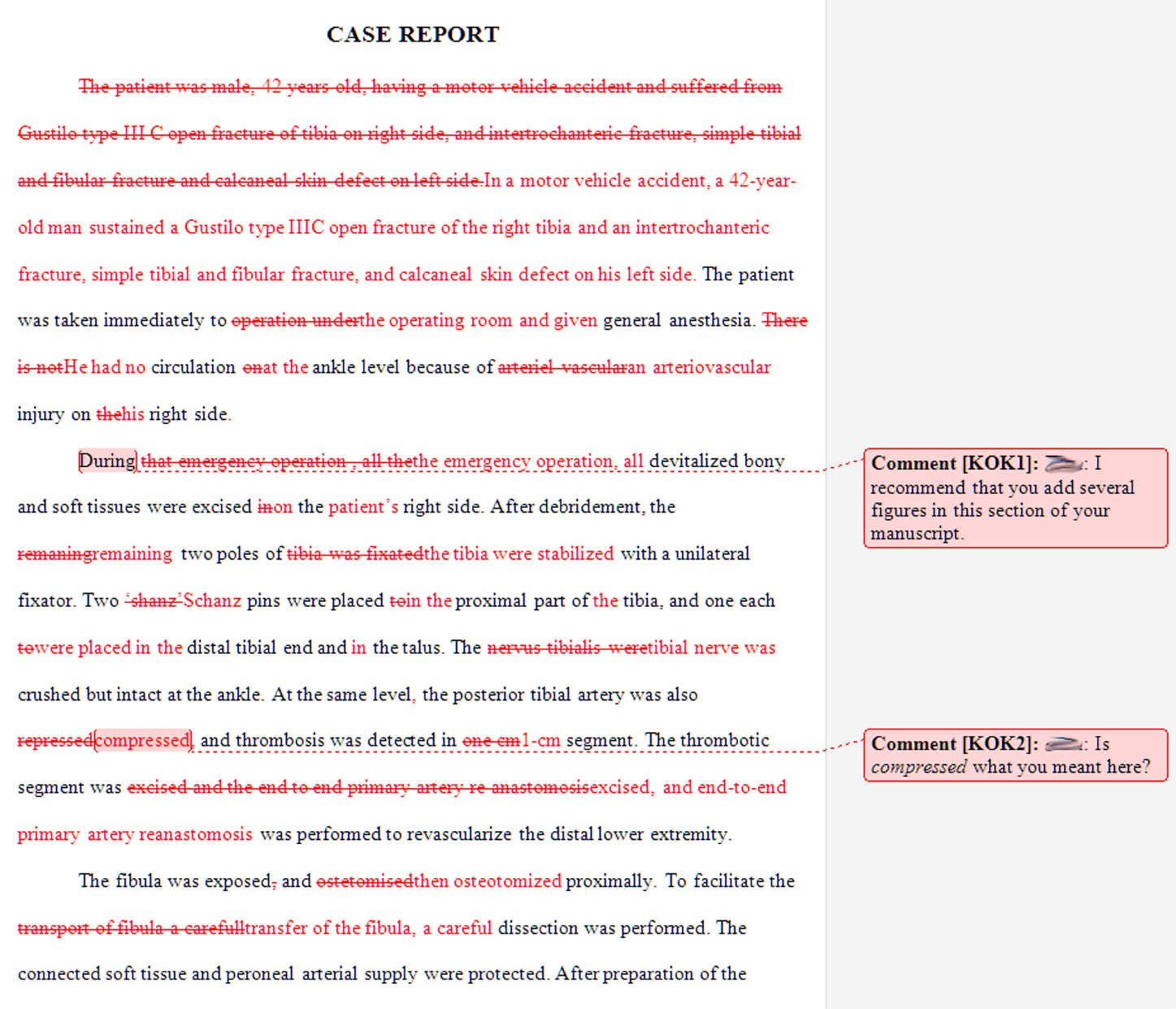
Before sending edited files to authors for review, I lock the files so that every change the authors make is tracked, using Word's Track Changes function. When I get the files back for review, I don't want to find out that the authors have made changes that I can't easily spot and review. (Yes, I can run Word's Compare function on my edited file and the file that the author reviewed but did not track. However, that function doesn't display the differences between documents in the way I can best process them. Your experience with Compare may be different.)
Also, I always send authors who are unfamiliar with the Track Changes function or with Word's comment balloons the following:
- A screen shot (an image file) of what an edited manuscript looks like with changes tracked and with comment balloons showing, so they'll know what they're supposed to be seeing on their screen
- This explanation for how I want them to review my editing:
The Track Changes function in Microsoft Word is turned on in your manuscript file to make it easy for me to tell which are your edits and comments and which are my edits and comments. You will not be able to use the Accept/Reject Changes function. This is to ensure that I can easily find your changes or comments to review them. If you do not agree with a particular edit, please delete it, and this will be tracked by Word. If text must be added, please insert it, and this will also be tracked by Word. Please place your answers to my queries at the end of the appropriate query.
- The link to the blog post "Deciphering a Redlined Manuscript"
- If the author is fairly computer savvy, the link to the article "How Does Track Changes in Microsoft Word Work?"
work tools editor–author_relationship Microsoft Word Track Changes comment balloons copyeditor copyediting editor editing publishing EditorMom
Tuesday, September 09, 2014
Writer-Responsible Versus Reader-Responsible Languages
The blog Language Log has a wonderful post on that discusses a major distinction in the mind-set of writers with different native languages: writer-responsible languages versus reader-responsible languages. This distinction is one that I had intuited after years of editing manuscripts for authors who are non-native English speakers from many different nations, but until now, I had not had terminology for it.
The post quotes this excerpt from the 2011 post "Who Is Responsible for the Message?" on the CAL Learning (Culture and Language Training for a Multicultural Workplace) blog by Lauren Supraner:
I can say with confidence, because of my work with authors from other nations, that Korean, Chinese, and Japanese are not the only reader-responsible languages. Reader versus writer responsibility is the element that causes my international authors the most difficulty in writing for US English-language biomedical journals, because they are asked to write in a style that they see as antagonizing readers:
clients ESL language differences copyeditor copyediting editor editing medical editing medical journals publishing EditorMom
The post quotes this excerpt from the 2011 post "Who Is Responsible for the Message?" on the CAL Learning (Culture and Language Training for a Multicultural Workplace) blog by Lauren Supraner:
English is a writer-responsible language. That means it is the responsibility of the writer to make sure the message is understood. Writing is clear, direct and unambiguous. Schools teach from early on the importance of structure, thesis statement and topic sentences when writing in English. A good writer assumes no or little background knowledge on the part of the reader.
Korean, Chinese, and Japanese are reader-responsible languages. That means the reader is responsible for deciphering the message, which is often not stated explicitly. For an American who is expecting direct and explicit information, this style can be very confusing.
Korean, Chinese, and Japanese are reader-responsible languages. That means the reader is responsible for deciphering the message, which is often not stated explicitly. For an American who is expecting direct and explicit information, this style can be very confusing.
I can say with confidence, because of my work with authors from other nations, that Korean, Chinese, and Japanese are not the only reader-responsible languages. Reader versus writer responsibility is the element that causes my international authors the most difficulty in writing for US English-language biomedical journals, because they are asked to write in a style that they see as antagonizing readers:
- It's rude because it's direct.
- It's rude because the writer doesn't take time to build a rapport with the reader.
- It's insulting because it assumes that readers don't know much about the subject matter and thus it entails explaining and defining material that intelligent, experienced readers likely already know.
- It's stiff because it requires many levels of parallel structure (such as parallel headings).
- It's unimaginative because writers are expected to avoid speculation about the meaning of their scientific findings.
- Most important is not explaining material that readers with advanced experience in the subject matter likely already know. This is seen as respectful of the reader's intelligence.
- Readers, being intelligent, are expected to read between the lines and interpret what they read.
- The writer uses a good deal of description.
- The writer tries to draw the reader into a discussion of the possibilities. This may involve expressing opinions rather than just reporting findings.
clients ESL language differences copyeditor copyediting editor editing medical editing medical journals publishing EditorMom
Monday, September 08, 2014
Perfect Bound: A Guide Through the Book-Publishing Process
Confession: I haven't read all of Perfect Bound: How to Navigate the Book Publishing Process Like a Pro yet. My paperback copy of it is shipping out to me now. So this isn't a book review, but I already know I want to use the book for two purposes:
 I've worked in the publishing industry, both as an employee of publishers and as a self-employed editor, for 30 years. And things have changed a lot since I started out in 1984. I'm at the top of my game as an editor, polishing manuscripts until they sparkle the way their authors intended. But truly good editors know that to maintain their expertise, they must constantly take part in continuing education about their industry. What I've read of Perfect Bound so far has convinced me that it will be an excellent continuing-education tool. And I intend to recommend it to my authors, whether they plan to work through traditional publishers or to self-publish.
The book covers these topics:
continuing education publishing process how-to editor EditorMom
- To help my book authors understand what to expect
- To teach myself more about the current indie publishing processes
The book covers these topics:
- Choosing a publication route
- The acquisitions process
- Manuscript development
- Copyediting and query resolution
- Design and layout
- Proofreading, author review, and final revisions
- Printers, distributors, and e-book companies
- Marketing and publicity
Perfect Bound: How to Navigate the Book Publishing Process Like a Pro, by Katherine Pickett, from Hop On Publishing LLC. Available in two formats: paperback (9780991499113; US$12.99) and ePub (9780991499120; US$7.99); 240 pages.
continuing education publishing process how-to editor EditorMom
Friday, September 05, 2014
Make Your Own Video Tutorials to Remember Computer Skills
On the email list of the Editorial Freelancers Association, my colleague Martha Carlson-Bradley shared an excellent self-teaching and memory aid for editorial types. She has given me permission to share it here. It sounds to me like a good tool to use when we're learning new computer skills or want to be able to remember later how to perform a skill that we use only occasionally.
Note that iShowU is for use on the Macintosh. But an online search shows me that there are also several screen-capture tools available for the PC, including Wink.
work tools skills learning memory aids copyeditor copyediting editor editing publishing EditorMom
I've used iShowU to record myself using a new skill—sometimes right after watching a video tutorial, sometimes while someone kind is showing me how to do something. (iShowU records what's happening on my computer monitor and also records sound.) So I have a little video of myself going through all the steps, with my own commentary. I've also used iShowU to make little instruction videos for a friend. They're not finished or professional videos, but it's comforting to know that I have my own little set of instructions, especially for tasks I don't do very often and tend to forget.
Note that iShowU is for use on the Macintosh. But an online search shows me that there are also several screen-capture tools available for the PC, including Wink.
work tools skills learning memory aids copyeditor copyediting editor editing publishing EditorMom
Tuesday, September 02, 2014
Working Directly with Authors: Hand-Holding Required
Often when we editors work directly with authors instead of through publishers or other intermediaries, part of our job is hand-holding nervous writers. I just had to send this to a talented, kind, but apprehensive young physician-researcher whose journal manuscripts I edit:
My author wrote back:
Taking just a few additional minutes to compose a longer explanation for my author made things easier for me (I now have a calmer author to work with) and made it very clear to my author that he has an advocate during the sometimes confusing and worry-making publication process.
clients authors relationships copyeditor copyediting editor editing publishing EditorMom
Here is a secret:
Even if a manuscript differs in a few places from a journal's preferences, most journals will not reject the manuscript because of that. But I have found that if we try our best to follow a journal's preferences, then the reviewers will focus on the ideas and research in the paper and not get distracted by little details such as whether an amount should be a word versus a number. No journal will expect that an author has perfectly followed the journal's minor preferences.
However, some journals will return a manuscript if authors don't follow their major preferences, such as preferences for reference citation (e.g., chronological order versus alphabetical order), for types of headings (e.g., "Materials and Methods"), for type of abstract (e.g., a single paragraph versus several short paragraphs, each with a mini heading), and for blinded versus unblinded manuscripts.
End of secret.
I will always do my best to make sure that your papers follow all of the major preferences (i.e., the preferences noted in the instructions to authors) and as many of the minor preferences as possible. Note that journals' author instructions don't often explain these minor preferences. But I figure out what their minor preferences are by studying articles that they have recently published.
What I am trying to say is this: You can relax because you are in good hands. I have been an editor for 30 years now. I am here to help guide your manuscript through the turbulent waters of manuscript submission. But because I know how important publication is for your career, I completely understand why you worry.
Even if a manuscript differs in a few places from a journal's preferences, most journals will not reject the manuscript because of that. But I have found that if we try our best to follow a journal's preferences, then the reviewers will focus on the ideas and research in the paper and not get distracted by little details such as whether an amount should be a word versus a number. No journal will expect that an author has perfectly followed the journal's minor preferences.
However, some journals will return a manuscript if authors don't follow their major preferences, such as preferences for reference citation (e.g., chronological order versus alphabetical order), for types of headings (e.g., "Materials and Methods"), for type of abstract (e.g., a single paragraph versus several short paragraphs, each with a mini heading), and for blinded versus unblinded manuscripts.
End of secret.
I will always do my best to make sure that your papers follow all of the major preferences (i.e., the preferences noted in the instructions to authors) and as many of the minor preferences as possible. Note that journals' author instructions don't often explain these minor preferences. But I figure out what their minor preferences are by studying articles that they have recently published.
What I am trying to say is this: You can relax because you are in good hands. I have been an editor for 30 years now. I am here to help guide your manuscript through the turbulent waters of manuscript submission. But because I know how important publication is for your career, I completely understand why you worry.
My author wrote back:
Thank you for your kind reply. I feel refreshed.
Thank you [also] for your useful ... secret. ... I learned a lot. In the future also, please teach me [the] knack and pitfall[s] [of] writing [in] English ... in addition to editing my manuscript. ^_^
Always I am counting on you! I appreciate your continued support and encouragement.
Thank you [also] for your useful ... secret. ... I learned a lot. In the future also, please teach me [the] knack and pitfall[s] [of] writing [in] English ... in addition to editing my manuscript. ^_^
Always I am counting on you! I appreciate your continued support and encouragement.
Taking just a few additional minutes to compose a longer explanation for my author made things easier for me (I now have a calmer author to work with) and made it very clear to my author that he has an advocate during the sometimes confusing and worry-making publication process.
clients authors relationships copyeditor copyediting editor editing publishing EditorMom
Wednesday, August 27, 2014
Edifix: Subscription Cloud-Based Service to Automate Editing and Styling of References
So far I am liking Edifix, a subscription cloud-based service that edits reference-list entries to match specified styles and provides digital object identifiers (DOIs) and/or PubMed identifiers (PMIDs) when available. I am experimenting with it via a free trial. I have no financial interest in the software or its producer.
Because more and more biomedical journals ask authors to provide DOIs and/or PMIDs, using this tool may save me lots of time, because I can say from experience that my authors are not going to go back and hunt down DOIs if I ask them to. Plus, editing a reference list for style and fixing incorrect details? Yes, I'll still need to read to ensure that all edited references look good. But the less time I have to spend on boring, repetitive tasks such as editing 56 entries in a reference list to fit a particular style, the more time I'll have for the get-down-in-the-mud-and-wrestle editing that I love to do.
Is Edifix a reference manager? No, said Bruce Rosenblum, CEO of Inera (the parent company for Edifix), in a recent interview on the blog of the Association of Learned & Professional Society Publishers:
The styles that Edifix can currently follow are
Once Edifix has run your batch of references, you can use the "Copy References to Clipboard" button and then paste the edited references into your document.
What I really like is that when Edifix can't properly format a particular reference, it tells you why, as in these two examples:
The following comment from Edifix on a problematic reference is invaluable, because I can use it to show my author or publisher client how resourceful I am, and the author can avoid appearing uninformed:
I asked Melissa-Leigh Gore from Customer Support whether Inera has plans to add capabilities to Edifix for more styles, such as Bluebook (The Bluebook: A Uniform System of Citation), Harvard, Turabian, AP (Associated Press Stylebook), Vancouver, ACS (American Chemical Society), AMS (American Mathematical Society), CSE (Scientific Style and Format: The CSE Manual for Authors, Editors, and Publishers), and ASA (American Sociological Association). She replied:
Now all I have to do is decide which pricing plan will work for me, because I can already see that this software is going to save me time, which is money:
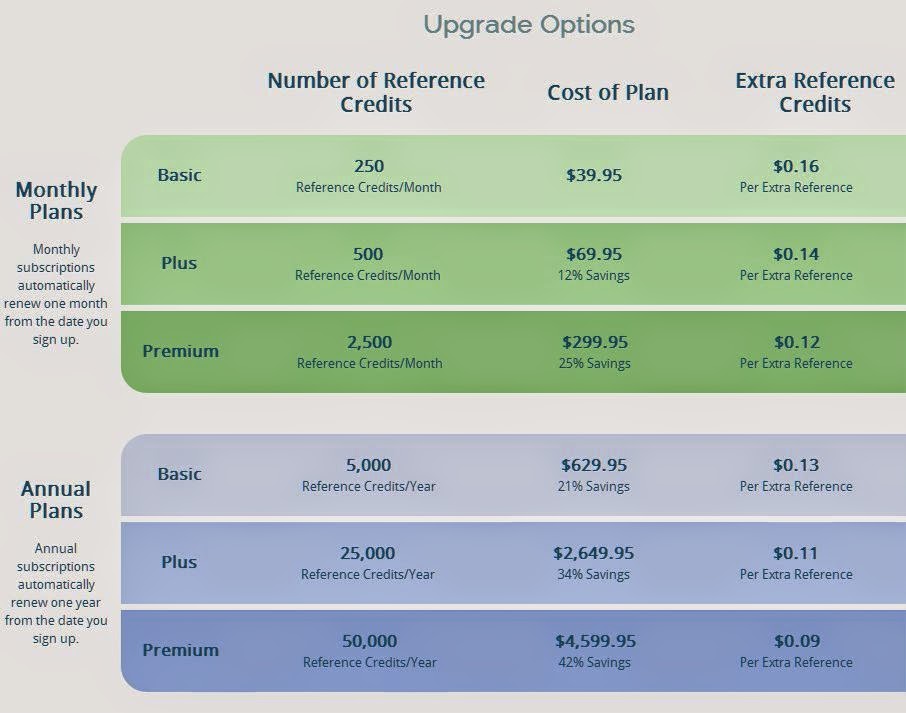
I have shown here only the plans that I will consider. I'll likely start with the monthly basic plan and then move up to the monthly plus plan if necessary. But there are also corporate plans, called Enterprise Plans, for publishers and other large organizations.
You can follow @Edifix on Twitter for tips about product use.
How did I find out about Edifix? I saw an ad for it in the July–August 2014 issue of The Freelancer, the newsletter of the Editorial Freelancers Association. That's an example of one of the ways it pays to be a member of a profession-related organization.
Have you tried Edifix? If so, please describe your experience with it in the comments.
[Updated at 5:13 p.m. Eastern time on August 27, 2014:] I asked customer-service rep Gore, "If I need to run 400 references through Edifix, can I do that all at once? Or does Edifix need to be served smaller chunks at any one time?"
She answered, "Technically, yes, we can run 400 references at once under perfect circumstances. However, this requires having a connection open to our reference processing server for a long time, and sometimes things can go wrong (the internet connection drops out, you click out of the page accidentally, etc). Based on that, presently we recommend not exceeding ~200 references per job for best performance."
work tools references style copyeditor copyediting editor editing publishing EditorMom
Because more and more biomedical journals ask authors to provide DOIs and/or PMIDs, using this tool may save me lots of time, because I can say from experience that my authors are not going to go back and hunt down DOIs if I ask them to. Plus, editing a reference list for style and fixing incorrect details? Yes, I'll still need to read to ensure that all edited references look good. But the less time I have to spend on boring, repetitive tasks such as editing 56 entries in a reference list to fit a particular style, the more time I'll have for the get-down-in-the-mud-and-wrestle editing that I love to do.
Is Edifix a reference manager? No, said Bruce Rosenblum, CEO of Inera (the parent company for Edifix), in a recent interview on the blog of the Association of Learned & Professional Society Publishers:
There are a number of tools on the market for managing bibliographic references; these tools are used primarily by researchers for maintaining reference databases and creating reference lists. Edifix, however, is not a reference manager. Reference managers require structured or fielded reference elements, which for plain-text references—the kind you find in a typical manuscript—involves a lot of cutting, pasting, and re-keying of reference data.
The styles that Edifix can currently follow are
- AMA (AMA Manual of Style)
- Chicago (The Chicago Manual of Style)
- ICMJE–WHO (International Committee of Medical Journal Editors–World Health Organization)
- RIS (Research Information Systems, which supports several reference managers, including Reference Manager)
Once Edifix has run your batch of references, you can use the "Copy References to Clipboard" button and then paste the edited references into your document.
What I really like is that when Edifix can't properly format a particular reference, it tells you why, as in these two examples:
Edifix has not updated ref. 4 "Hart, Cabalo, Bess, et al., 2013" because year differs from the author original, and volume and first page are missing. The PubMed reference is Hart R, Cabalo A, Bess S, Akbarnia B, Boachie-Adjei O, Burton D et al.; The International Spine Study Group. Comparison of Patient and Surgeon Perceptions of Adverse Events Following Adult Spinal Deformity Surgery. Spine (Phila Pa 1976) 2012 Nov
Edifix does not recognize the journal "J Jpn Orthop Ass" (in reference 26 "Izumida, Inoue, 1985"). If this is a valid journal title, please send this reference to journals@inera.com and we will add it to the Edifix journal database [italics and color are mine].
The following comment from Edifix on a problematic reference is invaluable, because I can use it to show my author or publisher client how resourceful I am, and the author can avoid appearing uninformed:
PubMed reports that reference 3 "Van Luit, Van der Molen, 2011" was retracted in "Res Dev Disabil. 2011 Nov-Dec;32(6):3018".
I asked Melissa-Leigh Gore from Customer Support whether Inera has plans to add capabilities to Edifix for more styles, such as Bluebook (The Bluebook: A Uniform System of Citation), Harvard, Turabian, AP (Associated Press Stylebook), Vancouver, ACS (American Chemical Society), AMS (American Mathematical Society), CSE (Scientific Style and Format: The CSE Manual for Authors, Editors, and Publishers), and ASA (American Sociological Association). She replied:
First, our ICMJE style is sometimes also referred to as Vancouver, so that may be of interest. We are planning to add CSE imminently, since we already have the template built. (We do very well with STM content in particular.) I would expect that to roll out in the next couple months. In the longer term, we are aiming to offer Citation Style Language [CSL] support, which would open up over 7,000 style templates for users to apply to their bibliographies, presumably including some of the others you indicated. There is more info here. The CSL integration does not yet have an expected launch date.
Now all I have to do is decide which pricing plan will work for me, because I can already see that this software is going to save me time, which is money:
I have shown here only the plans that I will consider. I'll likely start with the monthly basic plan and then move up to the monthly plus plan if necessary. But there are also corporate plans, called Enterprise Plans, for publishers and other large organizations.
You can follow @Edifix on Twitter for tips about product use.
How did I find out about Edifix? I saw an ad for it in the July–August 2014 issue of The Freelancer, the newsletter of the Editorial Freelancers Association. That's an example of one of the ways it pays to be a member of a profession-related organization.
Have you tried Edifix? If so, please describe your experience with it in the comments.
[Updated at 5:13 p.m. Eastern time on August 27, 2014:] I asked customer-service rep Gore, "If I need to run 400 references through Edifix, can I do that all at once? Or does Edifix need to be served smaller chunks at any one time?"
She answered, "Technically, yes, we can run 400 references at once under perfect circumstances. However, this requires having a connection open to our reference processing server for a long time, and sometimes things can go wrong (the internet connection drops out, you click out of the page accidentally, etc). Based on that, presently we recommend not exceeding ~200 references per job for best performance."
work tools references style copyeditor copyediting editor editing publishing EditorMom
Wednesday, August 20, 2014
How to Cope at Work When Your Personal Life Stinks
I like this advice on coping at work when your personal life is falling apart. Though I've been self-employed for 20 years now, I've been an employee who (eons ago) had to deal with a job while going through a divorce, being a single mom, and experiencing assorted other difficulties. When life has presented me with take-your-breath-away bad moments during the years I've been self-employed, I've been able to cope because of the online support of friends around the world.
work–life balance freelancing EditorMom
work–life balance freelancing EditorMom
Monday, August 18, 2014
Resources for Editors New to Setting Fees
For editors who are new to self-employment and who have difficulty with setting their fees, here is a list of resources that I culled from the "Business Tools" page of my Copyeditors' Knowledge Base:
fees cost estimate clients freelancing copyeditor copyediting editor editing publishing EditorMom
- "The Great Freelancer Pricing War" (blog post)
- Instant Estimate (a free online widget for calculating a project fee estimate)
- "Talking Fees with Colleagues" (blog post)
- "What If You Doubled Your Fees? Tomorrow?" (blog post)
fees cost estimate clients freelancing copyeditor copyediting editor editing publishing EditorMom
Friday, July 18, 2014
My News Sources on Twitter
Shhh! Here are my secret lists of news sources on Twitter:
Twitter tools news freelancing copyeditor copyediting editor editing EditorMom
Twitter tools news freelancing copyeditor copyediting editor editing EditorMom
Monday, June 02, 2014
Dear Newly Self-Employed Editors . . .
A few newly self-employed editors and soon-to-be self-employed editors kept me awake the other night.
No, they weren't partying noisily in my living room. They were in my head, asking for reassurance that self-employment won’t leave them broke and regretting that they left the safety of a weekly paycheck and workdays laid out for them by a supervisor. Those editors in my head told me that all the good things I’m always saying online about being self-employed helped convince them that they too can succeed at self-employment. To get them to leave my head, I had to write this post. I had to make sure that they’re developing a realistic view of freelancing.
Even after nearly 20 years of running my own editing business, I haven't burned out. In fact, some might say that I sound like a cheerleader for self-employment:
And self-employment usually is joyful for me. The happiness I express here and on Facebook, Twitter, LinkedIn, and email lists isn't faked or inflated.
But I want newbies to know that I have hard days too—and that I love freelancing despite those days. At different points since I started my business in 1995, I have
No, they weren't partying noisily in my living room. They were in my head, asking for reassurance that self-employment won’t leave them broke and regretting that they left the safety of a weekly paycheck and workdays laid out for them by a supervisor. Those editors in my head told me that all the good things I’m always saying online about being self-employed helped convince them that they too can succeed at self-employment. To get them to leave my head, I had to write this post. I had to make sure that they’re developing a realistic view of freelancing.
Even after nearly 20 years of running my own editing business, I haven't burned out. In fact, some might say that I sound like a cheerleader for self-employment:
I started my own business in 1995. Coincidentally, I haven't hated work since December 1994.
~ * ~
My international authors rock! One of my longtime authors from Japan was having trouble finding the right words in English to explain to me the concept he was trying to express in his manuscript. I don't speak or read Japanese, so we couldn't use that route. So I guessed, he guessed, and we still weren't where he wanted to be. Teacher that he is—in addition to being a surgeon and an author—he drew me a picture and sent it to me. Ta-da! I saw exactly what he meant, I emailed him to confirm, and we're done with another manuscript!
~ * ~
Starting the day with two happy authors and a new author by way of referral. Who needs caffeine?And self-employment usually is joyful for me. The happiness I express here and on Facebook, Twitter, LinkedIn, and email lists isn't faked or inflated.
But I want newbies to know that I have hard days too—and that I love freelancing despite those days. At different points since I started my business in 1995, I have
- Wondered whether insanity was what led me to believe that I could run a business while parenting children
- Tried multiple times to put a baby down in a crib for a nap so that I could edit with both hands, only to hear indignant shrieks when the baby realized I wasn't still holding him
- Edited while wearing pajamas, sipping chicken soup, and dabbing at my nose because an upper respiratory infection had me feeling miserable and a looming deadline left no time for me to crawl back into bed
- Taken multiple breaks from editing to make sure that a distracted child was still on task at homework time
- Asked my spouse, who is also self-employed, to stop talking about his own workday long enough for me to finish editing a problematic sentence that I have just reread five times and still don't comprehend
- Had a day from hell when the manuscript I was working on was in horrid shape but the client's budget didn't allow for extensive editing, and the client had the interpersonal skills of a rhino . . . and my preschooler started and stopped 12 different craft projects and then had a screaming fit because most of them weren't turning out how he had planned
- Panicked when I realized that as soon as I finished the project I was working on, I wouldn't have a new project to start on right away
- Wondered how I was going to be able to make the month's mortgage payment anywhere near on time, because three clients hadn't paid me when they were supposed to
- Lost a major client because the client and I were no longer a good fit
- Fired a major client because the project manager treated me—and all other freelancers—shabbily
- Made a mistake in the way I scheduled multiple projects that angered several clients, so I panicked about how I was going to get everything done and appease everyone
- Worked a 15-hour day to meet a deadline and had no time to relax with family members
- When I have to concentrate no matter what difficulties are going on at home or in the work sphere, I mentally compartmentalize. Get busy working, and your brain’s worry subroutines will run slower or even shut off for a while. But curl up in a ball on the couch and watch cartoons all day, or mope around and worry all day, and your problems will just keep piling up. Plus, you might miss a project deadline and thus lose a client.
- I give myself little bits of time for fun and relaxation throughout the day, whether that is talking with a friend or family member, going outdoors and enjoying birdsong and flowers, looking at online photos of cute animals, reading a novel, or taking a short nap.
- Every time I put together a project schedule, I add extra time to it because I know my initial schedule will be too optimistic, which will make life tough for me and tick off clients.
- Every single weekday, and sometimes even on weekends, I spend time marketing. That means keeping my name in the minds of people who can supply me with work: clients, potential clients, and colleagues. For me, what works is spending some time on profession-related email lists and blogs, on Twitter, on Facebook, and on LinkedIn, and staying in contact with existing clients by email. Because I do all of that consistently, it has been many years since I've had gaps in my work schedule, which means that income flow is much steadier now than when I first started freelancing. Even when I have more than enough work and am on deadline, I still do some marketing every weekday.
- Some colleagues might believe that I only chirp happily about self-employment. They would be wrong. I vent privately to a few friends, to mentors, and to family members.
- I focus on the good parts of self-employment. When I celebrate the happy-making stuff, I feel empowered and even get into the magical editing zone. And potential clients find my enthusiasm catching. But when I go over and over the occasional upsetting stuff, I feel robbed of my power and skills and start making more mistakes in my work. Potential clients are turned off by negativity, and colleagues aren't inclined to give referrals to a freelancer who constantly complains.
Friday, February 14, 2014
Everything You Ever Wanted to Know About Being a Freelance Editor
Want a chance to ask experienced freelance editors all the questions you can think of? Vegas, baby!
This year's national conference (March 20–22) of the American Copy Editors Society will be in Las Vegas, Nevada. And I'll be a panelist there at the Freelance Editors’ Forum, along with several of my distinguished colleagues:
freelancing freelancer editing editor American Copy Editors Society EditorMom
This year's national conference (March 20–22) of the American Copy Editors Society will be in Las Vegas, Nevada. And I'll be a panelist there at the Freelance Editors’ Forum, along with several of my distinguished colleagues:
- Erin C. Brenner (of Right Touch Editing, and editor of Copyediting newsletter)
- Mark Allen (of Mark Allen Editing, and a Copyediting columnist)
- Samantha Enslen (of Dragonfly Editing)
- Dawn McIlvain Stahl (of Dawn McIlvain Stahl Editorial, and online editor for the Copyediting website)
freelancing freelancer editing editor American Copy Editors Society EditorMom
Saturday, December 21, 2013
What Value Do You Get for Your Membership Dues in Profession-Related Organizations?

It would be quite helpful if US professional organizations for editorial workers produced US-centric charts for their members. Editorial Freelancers Association, American Medical Writers Association, Board of Editors in the Life Sciences, Council of Science Editors, and American Copy Editors Society, among many others, I'm looking at you.
professional associations freelancer freelancing copyediting copyeditor EditorMom
Subscribe to:
Posts (Atom)


